 PRODUCTION
300 L Hydraulic Discharge Press
CE CERTIFIED
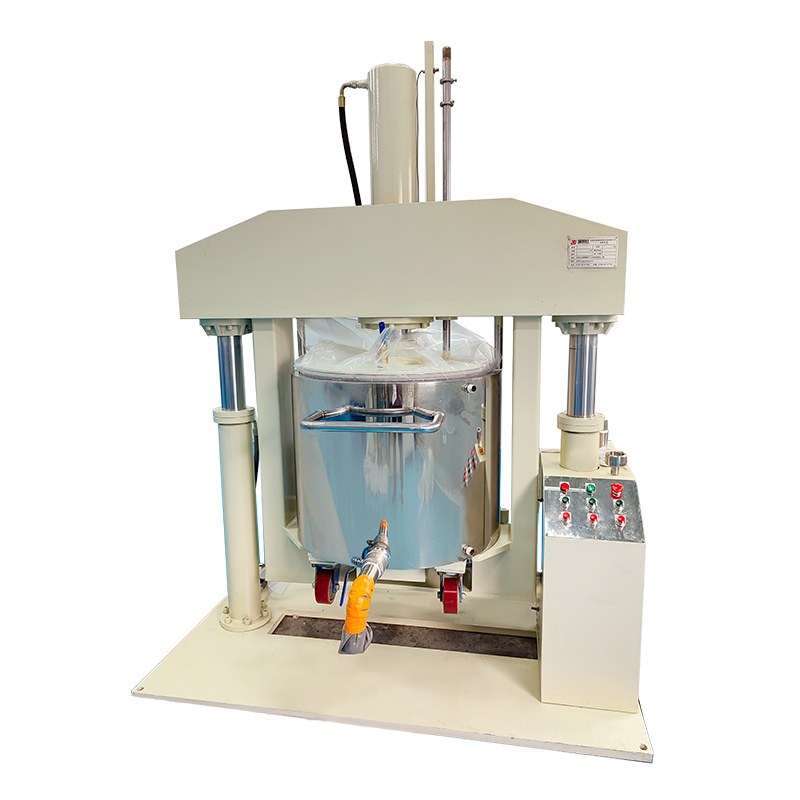
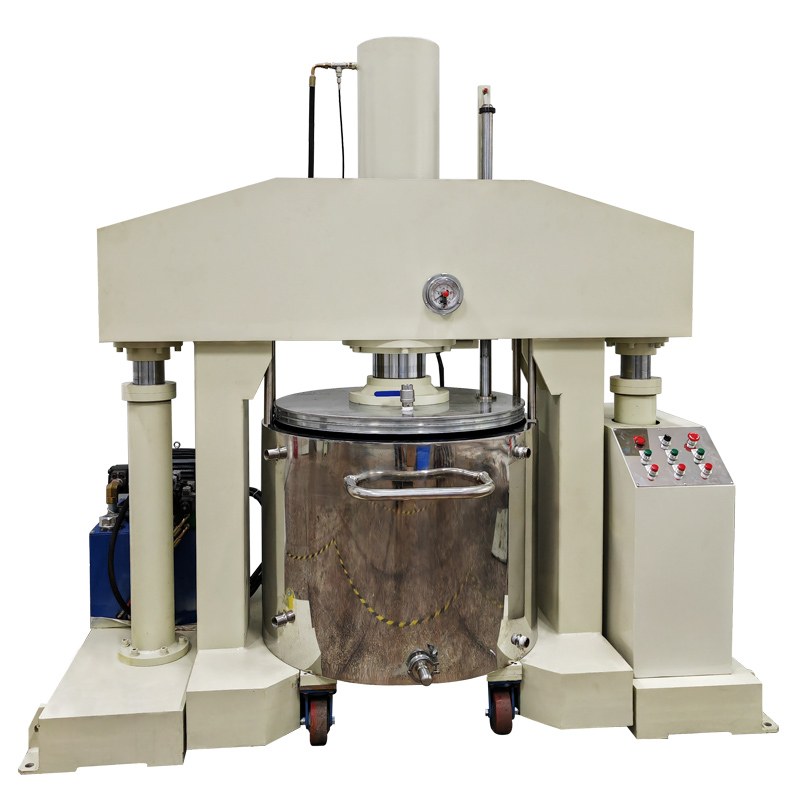
A 300-liter hydraulic discharge press with 0–20 MPa staged pressure, a pressure plate that seals against the vessel bore and a twin-cylinder lift — built to empty high-viscosity compound completely instead of leaving a heel behind.
Technical Specifications
A standalone hydraulic press that empties a mixer vessel: pressure plate in, batch out, vessel drained.
| Parameter | Specification Value | Engineering Notes |
|---|---|---|
| Working Pressure | 0 – 20 MPa | Adjustable in stages, any setting in range |
| Piston Control | Holds at any position | Continuous operation under holding pressure |
| Pressure Plate Seal | Rubber ring against vessel bore | Prevents back-flow; optional vacuum deaeration |
| Vessel Lift | Twin hydraulic cylinders | Vessel raised from both sides, any height in stroke |
| Frame Height | Reduced by twin-cylinder lift | Machine fits a standard door and a normal truck |
| Drainage | Vessel drains completely | Plate seals the bore so material cannot escape past it |
Key Design Features
The press is specified around the vessel it serves: plate diameter, bore sealing and lift stroke all follow the drawing.
0 to 20 MPa, Any Setting
The hydraulic circuit adjusts across the full 0–20 MPa range rather than offering fixed steps, and the piston rod holds at any position. A batch can be pressed slowly instead of in one stroke.
Rubber Ring Against the Bore
The rubber ring on the pressure plate seals against the vessel wall so material cannot back-flow past the plate. That is what allows the vessel to drain completely instead of leaving a heel at the bottom.
Deaeration Kit on the Plate
A vacuum deaeration kit can be fitted to the pressure plate, so the batch is held under vacuum while it is being pressed out rather than only during mixing.
Both Sides, Any Height
The current design lifts the vessel from both sides instead of lifting only the plate. The vessel can stop at any height within the stroke, which turns loading and unloading into a one-person job, and the overall frame height drops so the machine travels normally.
Where the Press Fits
Any line where a mixer vessel has to be emptied without losing material or re-entraining air.
Bulk Packing
Pressing paste from a mixer vessel directly into drums, pails or cartridges.
High-Viscosity Compound
Sealants, structural adhesives and filled systems that will not flow out under gravity.
Complete Vessel Drainage
Recovering the heel that would otherwise be scraped out by hand at the end of every batch.
Paired With a Mixer
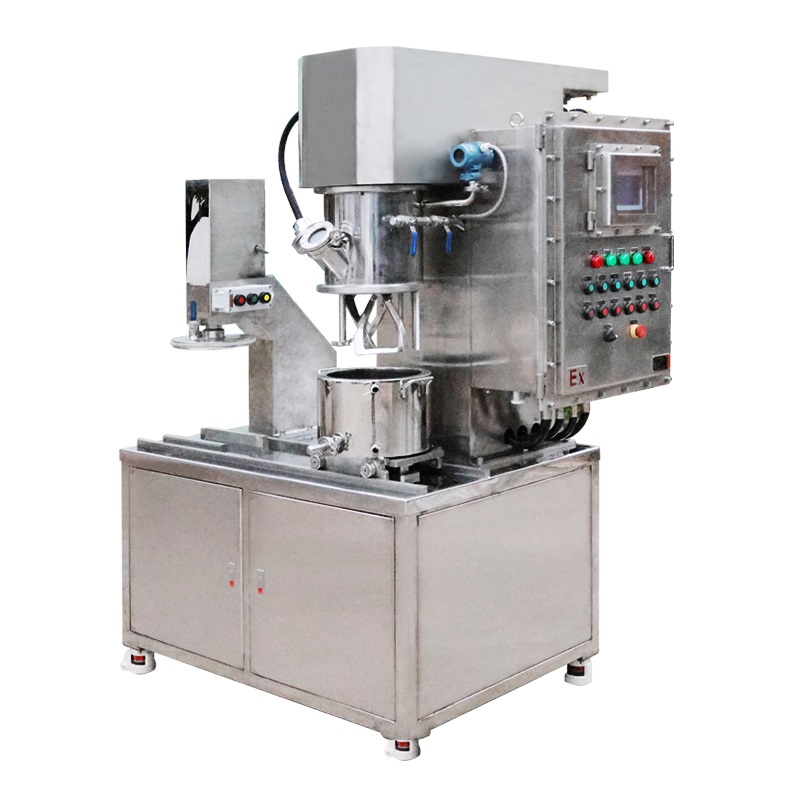
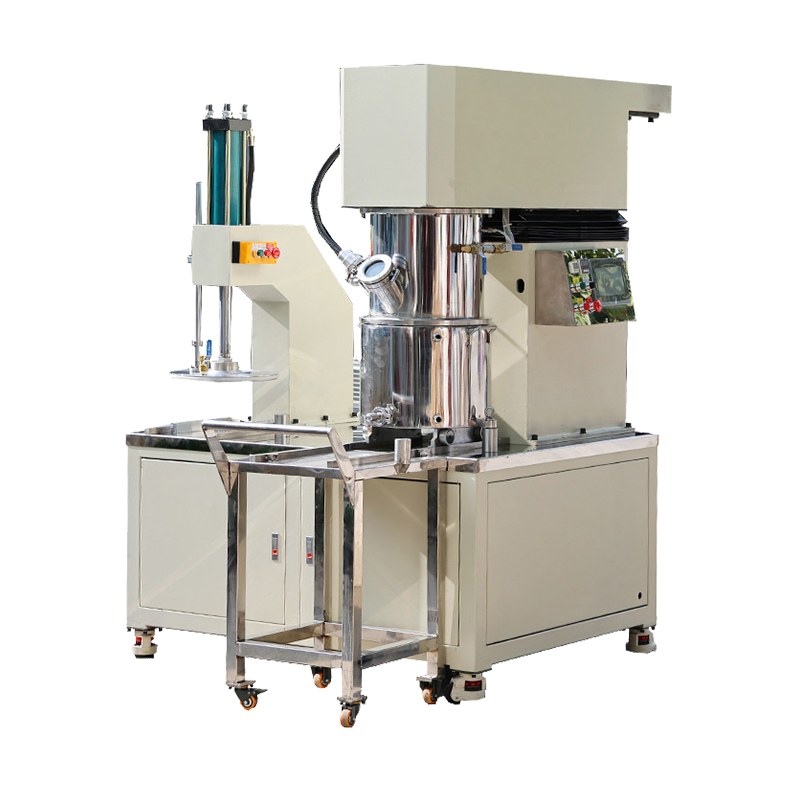
Serving a planetary or three-shaft mixer vessel as the discharge station.
Frequently Asked Questions — RJ-VPM-500L
Common engineering inquiries regarding vacuum retention, viscous material discharge, cleanroom compliance, and global FAT sign-off.
Q1. How is the press matched to a mixer vessel?
By the drawing. Plate diameter, bore tolerance and lift stroke all follow the vessel, so the press and the vessel are normally specified together rather than bought separately.
Q2. Does the plate leave a heel in the vessel?
No. The rubber ring seals against the bore so material cannot escape past the plate, and the vessel drains completely. That is the main difference between this and a simple platen press.
Q3. Can the paste be deaerated while it is being pressed?
Yes, with the optional vacuum deaeration kit fitted to the pressure plate. Without it, the batch is deaerated only during mixing and can pick air back up during discharge.
Related Processing Equipment