 SMALL BATCH
3 L Integrated Vacuum Mixer & Discharge Press
CE CERTIFIED
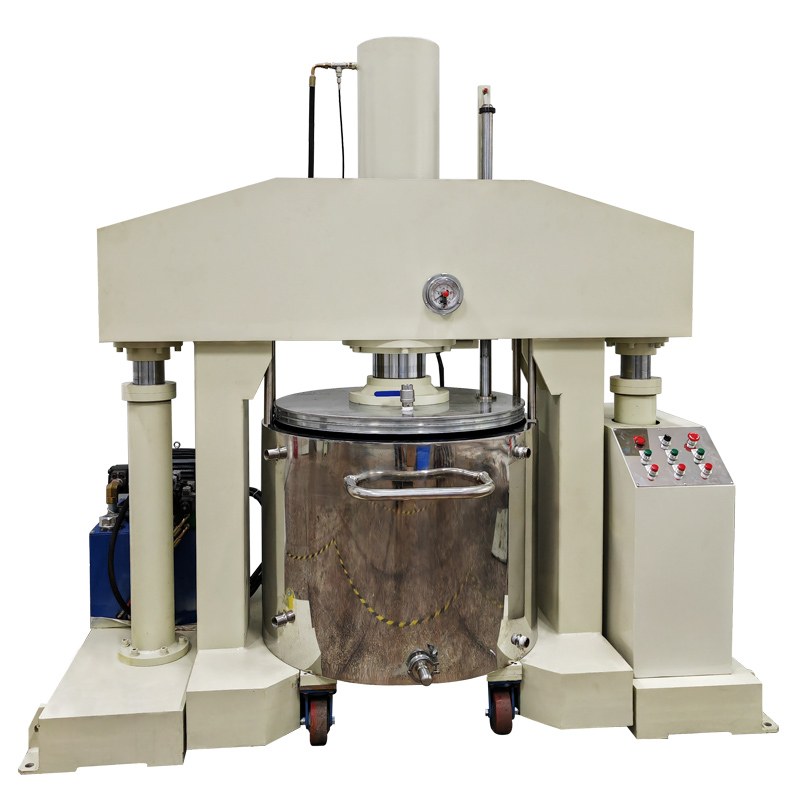
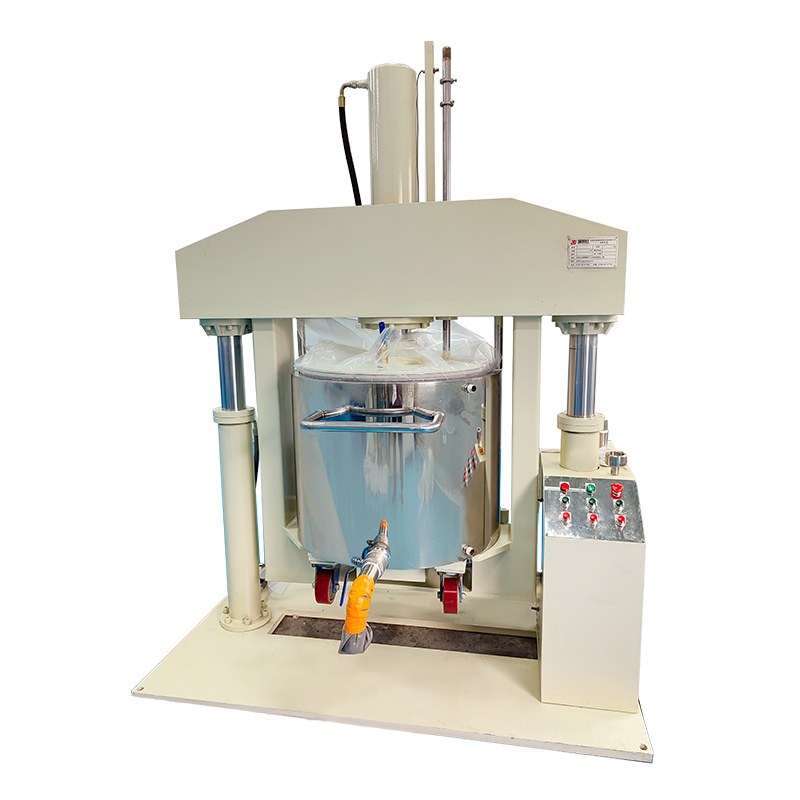
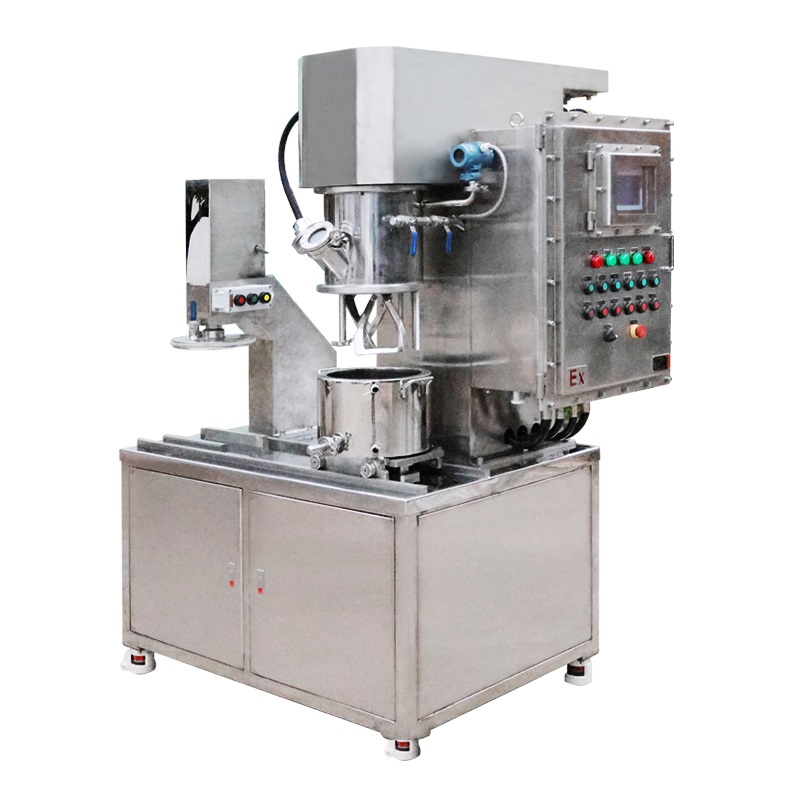
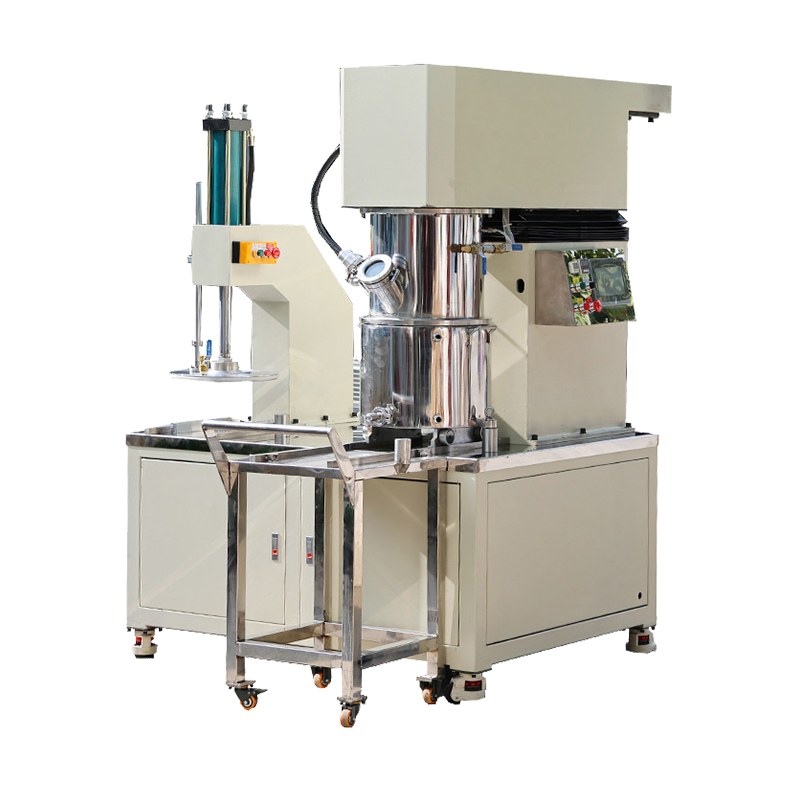
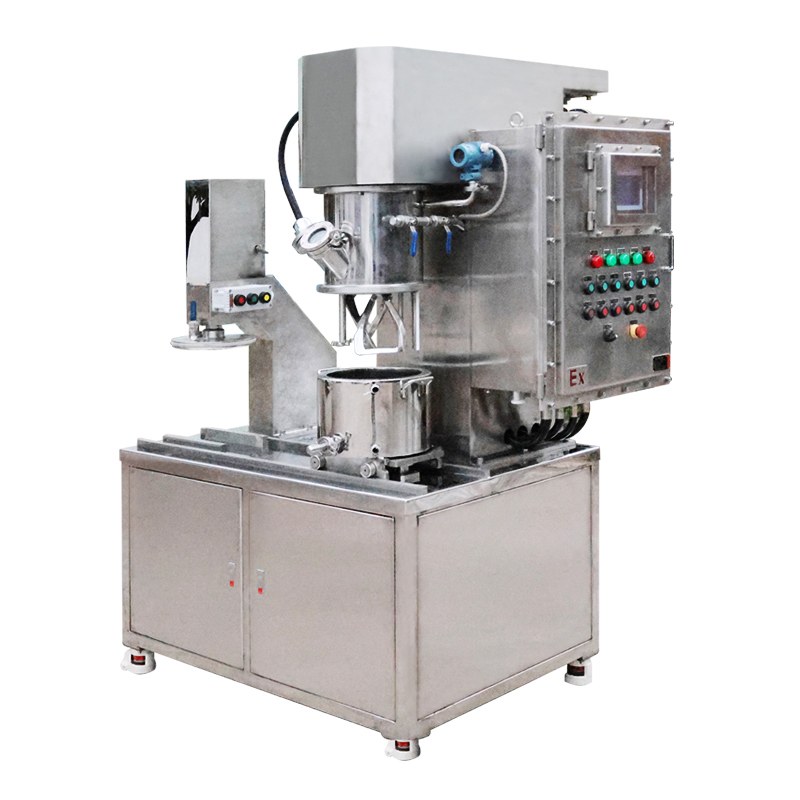
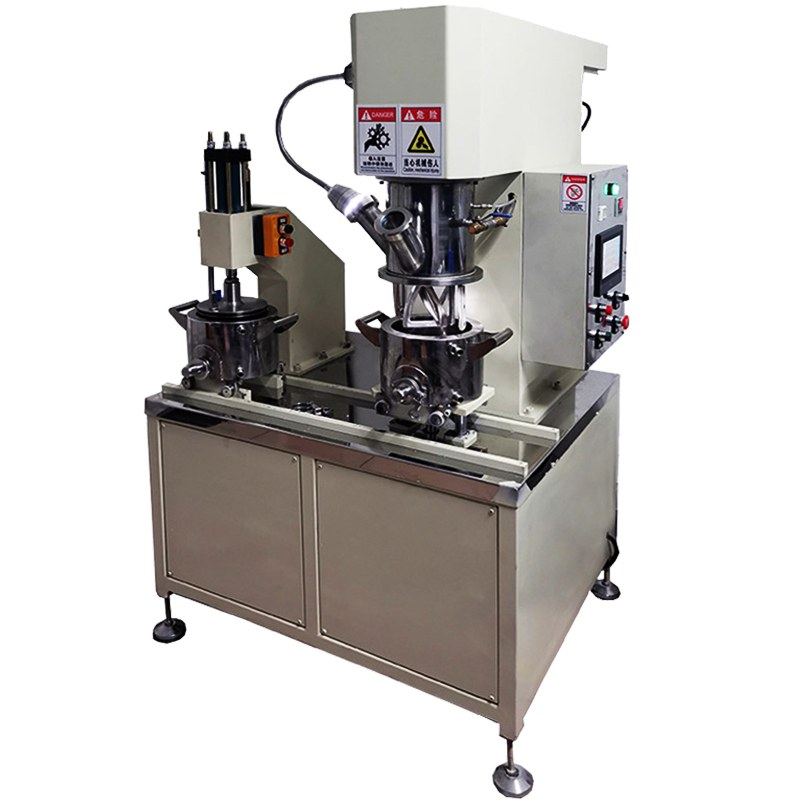
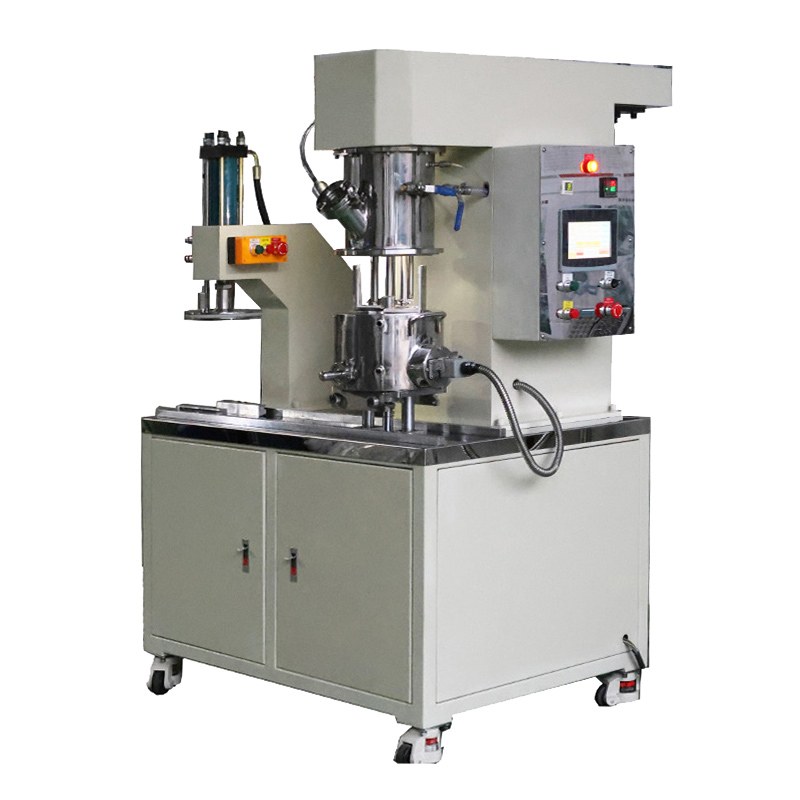
A 3-liter integrated vacuum mixer and discharge press: the batch is mixed under vacuum and pressed out of the same vessel at 7 MPa, with front discharge and touch-screen PLC control, so no transfer container and no second air exposure.
Technical Specifications
An integrated mixer and hydraulic discharge press on one frame, so the vessel that is mixed under vacuum is the vessel that is pressed.
| Parameter | Specification Value | Engineering Notes |
|---|---|---|
| Batch Volume | 3 L | Mixing and pressing in the same vessel |
| Discharge Cylinder | 7 MPa | Vane pump, integrated into the mixing frame |
| Discharge Direction | Front discharge | Standard for the integrated format |
| Vessel | Jacketed, vacuum-tight | The mixing vessel is the pressing vessel |
| Control System | Touch-screen HMI + PLC | Mix and press sequenced from one screen |
| Blade Construction | Single-piece die-cast twist blade | Weld-free, folding version optional |
| Vacuum Instrumentation | Panasonic digital vacuum gauge | Standard on all models |
Key Design Features
Three litres of paste, mixed and pressed in the same vessel, with no transfer container in between.
Mixed and Pressed in One Vessel
Thick paste does not drain: whatever clings to a mixer wall is either scraped out by hand or lost. Pressing in the vessel that mixed the batch removes that loss and removes the second free surface where air re-enters.
Hydraulic Cylinder and Vane Pump
The discharge cylinder runs at 7 MPa from a vane pump mounted on the frame, pushing a plate through the batch rather than relying on the paste to flow.
Standard Layout
Material leaves through a front discharge port at bench or trolley height, which is where the operator is already standing when filling cartridges or small containers.
Mix, Vacuum and Press in Sequence
Touch-screen HMI with PLC control sequences the vacuum hold and the press stroke, so the discharge pressure is a set value rather than an operator judgement.
Where the Integrated Format Fits
Small batches where a transfer would cost more than the machine saves.
Pilot Runs
Batches for customer qualification where the yield has to match the mixing record, litre for litre.
Sampling
Producing matched sample sets across several formulations without cleaning two machines between each.
High-Viscosity Paste
Pastes that will not flow out of a vessel under gravity, including filled adhesives and thermal compounds.
Small-Batch Production
Short runs of a high-value product where changeover time dominates the cost of the batch.
Frequently Asked Questions — RJ-VPM-500L
Common engineering inquiries regarding vacuum retention, viscous material discharge, cleanroom compliance, and global FAT sign-off.
Q1. Why press in the mixing vessel instead of a separate press?
Because a transfer costs yield, air and cleaning. High-viscosity paste does not drain from a mixer wall, and every free surface it passes on the way to a separate press re-entrains air that the vacuum hold just removed.
Q2. What pressure does the discharge cylinder develop?
7 MPa from a vane pump mounted on the frame. The plate is driven through the batch mechanically rather than relying on the paste to flow under its own weight.
Q3. Can the same frame handle a different vessel size?
Not as standard. The frame, plate diameter and discharge port are built around one vessel size; other volumes are quoted as non-standard builds against the drawing.
Related Processing Equipment